Xbox Disc to Digital Is Now Available to Everyone – Here’s How It Works
Xbox Disc to Digital is rolling out broadly, letting supported Xbox One and Series X discs gain linked digital access. Here’s how licences, cloud play and disc ownership work.
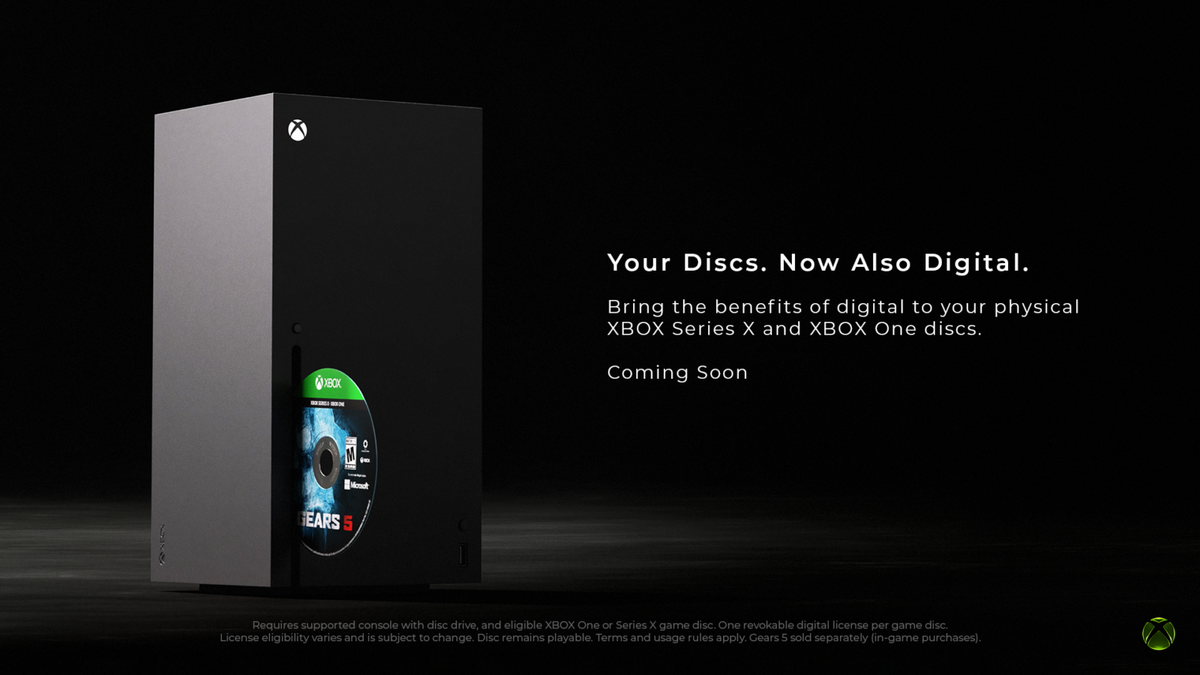
Xbox's Disc to Digital feature has moved beyond Insider testing and is now available more broadly, giving owners of supported Xbox One and Xbox Series X discs a way to claim a linked digital licence.
The feature was first announced by Microsoft in August and entered Xbox Insider testing on August 31. Following the September rollout, players with supported discs can now insert them into an Xbox console with an optical drive, accept the digital licence and then access the game digitally across supported Xbox devices and services.
This is not a simple one-time conversion where the physical disc becomes irrelevant forever. The digital licence remains linked to the disc, which is an important part of how Microsoft's new system works.
How Xbox Disc to Digital works
For a supported game, the process is straightforward:
- Sign in to your Xbox account.
- Insert an eligible Xbox One or Xbox Series X game disc into an Xbox console with an optical disc drive.
- Launch the game and accept the prompt to claim the digital licence.
- The title is then added to your Xbox library as a digital entitlement.
- You can access the game digitally on supported devices without needing to keep the disc inserted every time.
Microsoft's official Disc to Digital announcement says most Xbox One and Xbox Series X disc-based games support the feature, with thousands of titles included at launch and more planned over time.
The current Xbox Series X Disc to Digital FAQ also confirms that the digital licence remains linked to the physical disc.
You still own and can use the physical disc
Claiming the digital licence does not stop the original disc from working.
Microsoft says the physical game continues to function as before, while the linked entitlement adds digital flexibility.
That creates a hybrid model: the disc remains the underlying physical ownership token, but supported games can gain some of the conveniences normally associated with a digital purchase.
The digital licence remains tied to the disc
This is the most important detail to understand.
Xbox describes the entitlement as a revokable digital licence linked to the game disc.
That means Disc to Digital should not be viewed as a permanent free digital copy that can be separated from the physical game.
If the disc is sold, given away or otherwise changes hands, the linked digital access can be revoked and associated with the new legitimate holder.
This is how Microsoft can offer disc-free access without allowing one physical copy to create multiple permanent digital licences.
Which discs are supported?
Microsoft says the feature supports eligible Xbox One and Xbox Series X game discs.
It does not support original Xbox or Xbox 360 discs.
Not every modern disc is eligible either. Licensing, publisher participation and individual game circumstances can affect support.
The simplest official way to check is to insert the disc into a compatible Xbox console. If the game supports Disc to Digital, Xbox should present the option to accept a digital licence.
There is currently no single official public list covering every compatible title.
Which consoles can claim a digital licence?
You need access to an Xbox console with an optical disc drive to claim the entitlement.
That includes compatible disc-drive Xbox One hardware and disc-drive Xbox Series X models.
An all-digital console cannot read the physical disc itself, so it cannot perform the initial disc verification.
Once the entitlement is claimed, however, supported digital access can extend beyond the console that read the disc.
Why this matters for all-digital Xbox devices
One of the most useful applications is allowing a physical Xbox library to become more flexible.
A player may own an Xbox Series X with a disc drive in one room but also use an all-digital Xbox device elsewhere. With a supported Disc to Digital entitlement, that game can appear in the Xbox library without requiring the second device to read the disc.
The same principle can apply to Xbox Cloud Gaming and Xbox Play Anywhere where the individual game supports those features.
Microsoft specifically highlighted those digital benefits when it introduced Disc to Digital.
Xbox Play Anywhere is still game-dependent
Disc to Digital does not automatically turn every supported physical game into an Xbox Play Anywhere title.
Play Anywhere support depends on the game itself.
If a title supports Xbox Play Anywhere and its Disc to Digital entitlement includes that access, the digital licence can make it easier to move between Xbox and Windows PC while keeping supported saves and ownership benefits together.
If a game does not support Play Anywhere, claiming the digital licence does not add the feature.
Cloud gaming is also title-dependent
The same applies to Xbox Cloud Gaming.
A Disc to Digital licence can be used with cloud features where supported, but not every Xbox game is cloud-enabled.
Players should therefore treat cloud access as an additional benefit for eligible titles rather than something guaranteed by every converted disc.
More than 1,500 games have already been identified by the community
Microsoft has said the programme begins with thousands of supported titles but has not published a complete searchable compatibility list.
Community tracking has already identified well over 1,500 compatible games, although those lists can change as publishers and individual titles are added.
That makes the feature far broader than a small experiment, but the absence of a definitive official database means testing your own discs remains the most reliable method.
What happens if you sell the disc?
Because the licence remains tied to the physical copy, selling the disc can result in your digital entitlement being revoked.
That is a crucial difference from buying a normal digital game from the Xbox Store.
A standard digital purchase belongs to the purchasing account under the store's licence terms. A Disc to Digital entitlement exists because the account has been associated with a specific supported physical disc.
If ownership of that disc changes, the entitlement can move away from the previous account.
Can two people claim the same disc?
The system is designed around one revokable digital licence per eligible game disc.
That prevents a single disc from being passed around to generate permanent digital copies for multiple accounts.
Microsoft's Xbox Series X terms explicitly describe the entitlement as one revokable licence per disc.
Xbox 360 and original Xbox discs are excluded
Backward compatibility may make this part confusing.
Xbox Series X can play many older Xbox and Xbox 360 games through backward compatibility, but those discs do not qualify for the new Disc to Digital licensing system.
Microsoft's current FAQ specifically limits Disc to Digital to supported Xbox One and Xbox Series X discs.
So an older backward-compatible disc can still work in the traditional way where supported, but it does not gain this newer digital entitlement.
What if the option does not appear?
Because the feature has only recently moved beyond Insider testing, some players may need to restart their console before the new prompt appears.
If there is still no option after a restart, the most likely explanation is that the individual disc is not currently supported.
Support can vary by title, publisher and market, so the absence of a prompt does not necessarily indicate a problem with the console.
Gears of War: E-Day is part of the programme
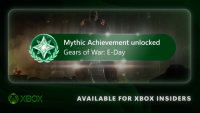
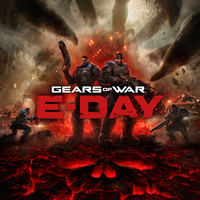
Microsoft has confirmed that Gears of War: E-Day participates in Disc to Digital, making it one of the most visible new releases to support the system.
E-Day launches worldwide on October 6, with early access already underway for eligible players. Our Gears of War: E-Day launch coverage has the full release details.
That is a useful indication that Disc to Digital is not only aimed at preserving older physical libraries; Microsoft is also building support into major new Xbox releases.
Is Disc to Digital the same as converting a disc permanently?
No.
The word "conversion" can be misleading because the physical disc is not being exchanged or permanently turned into an independent digital purchase.
A better way to think about it is a digital entitlement attached to a verified physical copy.
You keep the disc. The disc remains usable. The digital access exists alongside it, but ownership of the physical copy still matters.
Why Xbox is doing this
Microsoft has framed Disc to Digital as part of its wider approach to game preservation and library portability.
Xbox libraries now span physical discs, digital purchases, cloud gaming, PCs and multiple console generations. A system that lets supported physical ownership participate in more of that ecosystem reduces the gap between how disc buyers and digital buyers can access their games.
There are still limitations: older discs are excluded, publisher support is not universal and the entitlement remains revokable.
But for players with shelves full of Xbox One and Series X games, it is a meaningful new way to use physical purchases without giving up the discs themselves.
As of October 2026, the key rule is simple: insert an eligible Xbox One or Series X disc, claim its linked digital licence, and keep the disc because that physical copy remains the basis of the entitlement.